
Maze Navigation Basics
Each round places you inside a grid of walls and corridors. Using keyboard controls, you move your character along the paths, searching for ways to advance. Some walls can be removed by picking up special items that appear on the floor. Clearing these barriers opens new routes and reveals hidden areas. The layout changes each time you play, so you must adapt your route on the fly. This keeps the experience fresh and encourages repeated attempts.
Competitive Item Strategy
Items scattered throughout the maze serve two purposes. Some help you by removing obstacles or granting a temporary speed boost. Others can be placed behind you to slow down opponents who are following your path. Choosing when to use an item and where to drop it becomes a tactical decision. In two-player matches, this creates a playful back-and-forth where each participant tries to outmaneuver the other. The last character still moving when the maze is fully cleared wins.
Character Selection and Personality
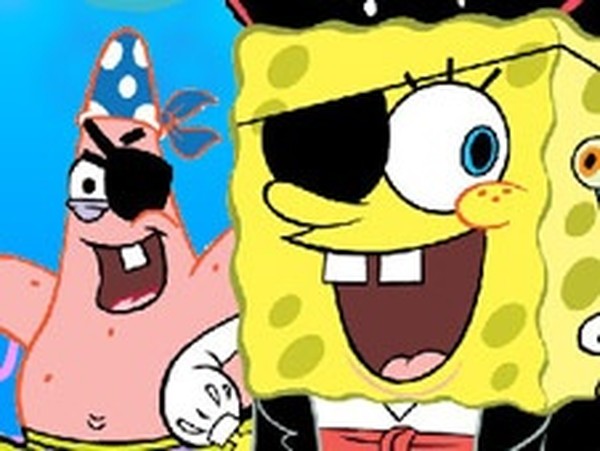
Players can pick from four familiar faces, each with their own visual style. The cheerful sponge, his starfish friend, the grumpy octopus, and the energetic squirrel all handle similarly, so the choice comes down to personal preference. Their animations and expressions add charm to every move. Seeing these characters navigate the maze and react to items brings a lighthearted tone to the puzzle action.
Visual Style and Atmosphere
The game uses bright, saturated colors that match the underwater setting. Corridors are lined with coral-like blocks, and the background shows a deep blue ocean. Icons for items and bonuses are easy to recognize at a glance. The overall look is clean and inviting, making it suitable for younger players. The cheerful music and sound effects reinforce the playful mood without becoming distracting.
Cooperative and Solo Play
A single-player mode lets you practice maze navigation and item timing at your own pace. The two-player mode uses separate keyboard keys for each participant, allowing friends or family members to compete on the same screen. This setup encourages social interaction without requiring additional hardware. Both modes share the same maze layouts and item sets, so skills learned in one transfer directly to the other.


Player Comments
0 comments